Essay · Talent, practising & hobbies
Having skills without the so-called talent
A discussion about acquiring skills without the presence of innate talent.

Everyone has heard the belief that people can achieve great things even if they do not have the so-called talent; just by consistency, effort, and strategy. Today I want to talk not about how this is possible, but how a non-gifted person feels while going through this process, and what obstacles they face compared to talented people.
It is evident that the presence of innate talent makes the process of acquiring a skill not only easier and faster, but also enjoyable. This is a different kind of struggle for gifted people: the joy of success without the effort. But that is a completely different topic that I will not touch on today. What I want to emphasize is the struggles of non-gifted people.
This struggle can be on any topic: playing sports like football or basketball, playing an instrument, or drawing. Even academic skills like mathematics, programming, or writing. I won’t limit the discussion to any specific skill.
A. Beginner phase

When a talented person starts learning a skill, they progress fast. Everybody enjoys progress. But most talented people also enjoy the process: applying their skills. For 17-year-old Neymar, playing football was fun; destroying his opponents and scoring impossible goals was almost effortless. Often, these people get awarded for their talent, not their skills. It can be money, fame, fear, or just recognition.
Non-gifted people lack this feedback loop. They do not progress fast. Even though they love the process, they cannot enjoy the progress as they will feel like a baby taking their first steps while everyone else is running. This is a very demotivating experience. It’s a great challenge for a person to consistently show up to get better at what they suck at. This is the hobbyist phase for them. They either continue showing up and make this hobby a part of their life, or they quit.
B. The comparison trap
The number of opportunities is exponentially proportional to actions. If a person has multiple snacks lying around the house, he is way more likely to gain weight than a person who has only healthy snacks hidden in their fridge. This phenomenon is very similar in the comparison game.
“There is always at least one person better than you at what you do.”
I love the saying, “There is always at least one person better than you at what you do.” This is true for even the most talented people. For Neymar, there were only Messi and Ronaldo to even compare himself with. For the everyday Joe, there are more people just in their office that they can compare themselves with. This brings us to the phenomenon I explained above: they have too many people to compare themselves with. They are infinitely more likely to fall into the trap of comparison.

If you go into a spiral of looking for “better” people than you, inevitably you will find what you do worse than them. This is a highly unpleasant experience. It is a blow to your self-esteem. It makes you question your efforts. It makes you question your worthiness of the skill you are trying to acquire.
C. Is it worth it?
When a non-gifted person starts thinking about what they are doing worse, they will start to notice that there are billions of details they need to practice just to get to an “attractive” level. Strangely, in guitar communities, it is solved by just saying, “If you enjoy what you hear, just keep practicing and playing; you do not need to be a virtuoso to enjoy it.” This mindset turns the skill into what we call a hobby. This is adequate for most people on most skills. For playing guitar, playing in a Sunday soccer league, or sketching in a drafting notebook, this is enough. Because it is not worth it to go beyond this point for them.
But for some people, they want to go beyond this point. They want to be good at what they do. They want to be recognized for their skills. They want to make a living out of it. They want to compete with others. They want to be better than others.
However, seeing people you would not deem worthy of being better than you actually being better than you is a psychological struggle. You will have to put as much effort into solving it as you would put into actually getting better at the skill. This is a mental burden that non-gifted people have to carry. Let’s introduce a phenomenon inversely related to the one in section B:
The number of balls you need to juggle is exponentially proportional to the likelihood of screwing everything up, after a certain threshold.
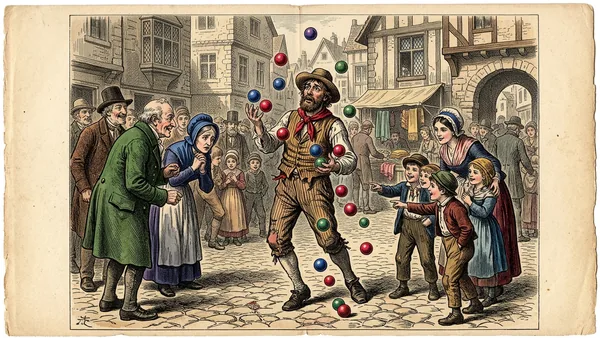
For a non-gifted person to be in the top 1%, they not only need to juggle the skill acquisition; they also need to juggle progressing slower, they need to juggle the comparison trap, they need to juggle self-doubt, and they need to juggle the worthiness of their efforts. All of these mental loads make it way more likely for them not to achieve the top 1%.
D. The low-ceiling effect
It is a common belief that non-gifted people have a lower ceiling than gifted people. For example, if a person’s top speed is 20 kph while running, they would not see 25 kph in their life no matter how much they practice; whereas another person can run their first sprint of their life at 26 kph. There are multiple hardware limits that prevent or enable this. However, I believe that the more complex the skill we are talking about, the less this ceiling is a hardware limit, but rather the result of the phenomenon I explained in section C. If we go with the guitar example again, for a person to be a top 1% guitarist, they need to have:
- great ear for note recognition
- great sense of beats and rhythm
- great finger dexterity
- great theory knowledge
- and the skill of translating emotion to sound.

If you started from zero on each of these skills, the required time to reach that level exceeds your lifetime. However, if you are gifted in even one of these skills, the required time drops significantly. This is why I believe that non-gifted people have a lower ceiling; not because of hardware limits, but because of the time required to reach that ceiling.
Conclusion
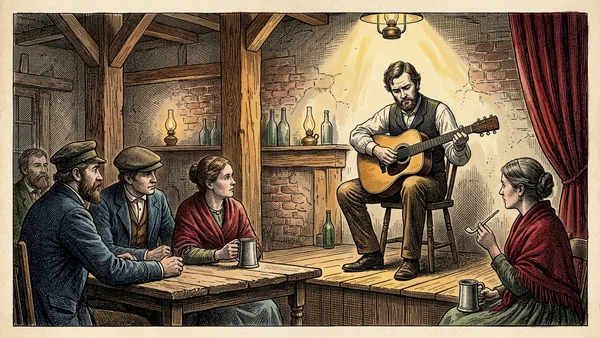
It is obvious that non-gifted people can achieve great things. However, the struggle they go through is way more complex and challenging if they want to go beyond the hobbyist level. For stimulating that feeling of being top 1%, I am applying this strategy: do not try to get better than others at the general skill, but try to get better than others on a very specific sub-skill. For example, instead of trying to be the best guitarist, try to be the best “Nothing Else Matters” cover guitarist. Instead of trying to be the best football player in your neighborhood, try to be the best shooter. This way, the leading path is clearer, the focus is narrower, the comparison trap is less harmful, the mental load is less heavy, and maybe the ceiling is higher.
“Instead of trying to be the best guitarist, try to be the best ‘Nothing Else Matters’ cover guitarist.”